
Partial Loc Extensions: A Smart Solution for Uneven Growth
Loc journeys don’t always grow evenly.
It’s very common for one area of the head to grow faster, thicker, or longer than another. Some clients notice thinning at the crown, shorter locs in the top section, or areas that broke at some point in their journey.
When this happens, many people assume the only solution is to cut everything down and start over.
But that’s not always necessary.
Partial loc extensions can offer a thoughtful, balanced solution that helps restore symmetry without disrupting the rest of your loc journey.
If you're still exploring whether extensions are right for you in general, you may also want to read our guide:
What Are Partial Loc Extensions?

Partial loc extensions are exactly what they sound like:
extensions added only to specific locs or areas of the head.
Instead of installing extensions throughout the entire head, a loctician carefully selects the locs that need support, additional length, or structural balance.
This approach works well for clients who have:
• uneven loc length
• shorter locs in the top area
• previous damage that caused length loss
• sections that were restarted at a different time
Rather than restarting your entire set of locs, partial extensions allow you to correct the imbalance while preserving the progress you’ve already made.
If uneven growth has been caused by breakage or dryness, you may also want to review our article on preventing heat damage and protecting your curl pattern.
Why Partial Installs Often Look More Natural
One of the biggest concerns clients have about loc extensions is whether they will look artificial.
When extensions are installed across the entire head without careful planning, the result can sometimes feel heavy or overly uniform.
Partial installs avoid that problem.
Because extensions are only added where needed, the overall look stays organic and balanced. Your natural locs remain the foundation, and the extensions simply help fill in the gaps.
When done properly, the goal is not to make the extensions noticeable.
The goal is to make the entire head of locs feel cohesive again.
Maintaining a healthy foundation is key. If you're unsure how to care for your locs between appointments, our guide on proper loc maintenance routines can help you keep your locs balanced and strong.
The Most Important Step: Structural Assessment
Before any loc extension service, the first step should always be a strand and scalp assessment.
Every head of locs has different:
• density
• part size
• loc thickness
• scalp sensitivity
• growth patterns
Adding extensions without considering these factors can create tension or imbalance over time.
During an assessment, your loctician determines:
• whether your existing locs can support added length
• how much extension hair is appropriate
• where extensions should (or should not) be placed
This step protects the health of your scalp and ensures the final result feels comfortable long-term.
If you're experiencing scalp sensitivity or dryness, you may also find our article on maintaining scalp health for locs helpful.
The Installation Process
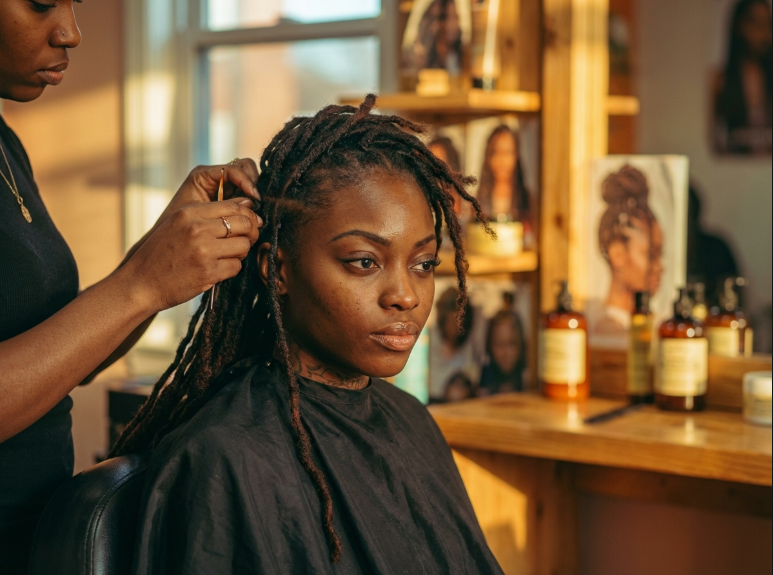
Once a plan is established, the extension hair is matched to your existing loc structure.
This includes matching:
• loc thickness
• color tone
• density
• texture
Extensions are then attached using crochet techniques that allow the new hair to integrate into the existing loc.
The goal is to create a seamless transition between your natural loc and the added length.
With time, your natural hair continues growing through the loc, and the extension becomes part of the overall structure.
Do Partial Loc Extensions Damage Your Hair?
This is one of the most common questions clients ask.
Extensions themselves do not damage hair.
Problems usually occur when:
• too much weight is added to a fragile loc
• the extension is installed too tightly
• density does not match the natural loc
• or maintenance is neglected
When extensions are installed thoughtfully and maintained correctly, they can blend into your loc journey without harming your natural hair.
If you're curious about common extension myths, our post Thinking About Loc Extensions? Here's What to Know Before You Decide breaks down several of the biggest misconceptions.
Scalp and Loc Health Assessment
Healthy loc extensions always start with a healthy scalp.
Before any extension installation, a professional assessment should evaluate several factors:
• scalp health and follicle stability
• density and part sizing
• loc thickness and maturity
• areas of previous tension or breakage
• overall strand strength and elasticity
This assessment helps determine whether your locs can safely support added length.
If the scalp shows signs of irritation, thinning, or tension stress, it may be better to focus first on restoring scalp balance and strengthening the existing locs before considering extensions.
In some cases, improving scalp care, adjusting maintenance routines, and allowing the locs time to strengthen can resolve many of the concerns clients are experiencing.
Extensions should enhance a loc journey — not place additional stress on hair that is already struggling.
Caring for Loc Extensions After Installation

Once your partial extensions are installed, your routine will remain very similar to your normal loc care.
Focus on:
• gentle cleansing with residue-free shampoo
• lightweight hydration sprays
• avoiding heavy waxes or creams
• keeping locs fully dry after washing
• maintaining consistent appointments for root maintenance
If you swim frequently or expose your hair to chlorine or salt water, it's important to protect your locs properly. Our FAQ guide on protecting curls and locs from chlorine and saltwater shares helpful prevention tips.
Regular maintenance allows your natural hair to grow smoothly while keeping the extension area secure.
Scalp Care Matters More Than Most People Realize
The health of your scalp plays a major role in how well loc extensions perform over time.
Keeping the scalp clean, balanced, and lightly moisturized helps support strong hair growth and prevents tension issues at the root.
A healthy routine typically includes:
• regular cleansing with residue-free shampoo
• lightweight hydration rather than heavy buildup-causing products
• gentle scalp oiling only when dryness is present
• consistent maintenance appointments
When the scalp environment is healthy, loc extensions integrate more smoothly and remain comfortable long term.
A Thoughtful Approach to Your Loc Journey
Locs are deeply personal.
They represent time, patience, and commitment to a journey that unfolds gradually.
When something interrupts that process — whether it’s breakage, uneven growth, or past damage — it can feel discouraging.
Partial loc extensions offer a way to restore balance without undoing the progress you’ve made.
If you're unsure whether partial extensions would work for your locs, a consultation is the best place to start. Together we can evaluate your strand health, density, and growth pattern to determine the safest and most natural approach.
Because every crown deserves care that is intentional, informed, and supportive of your long-term loc journey.
Loc’d Affinity Naturals
Educated care. Structured results.
🌿💁♀️✨


Comments